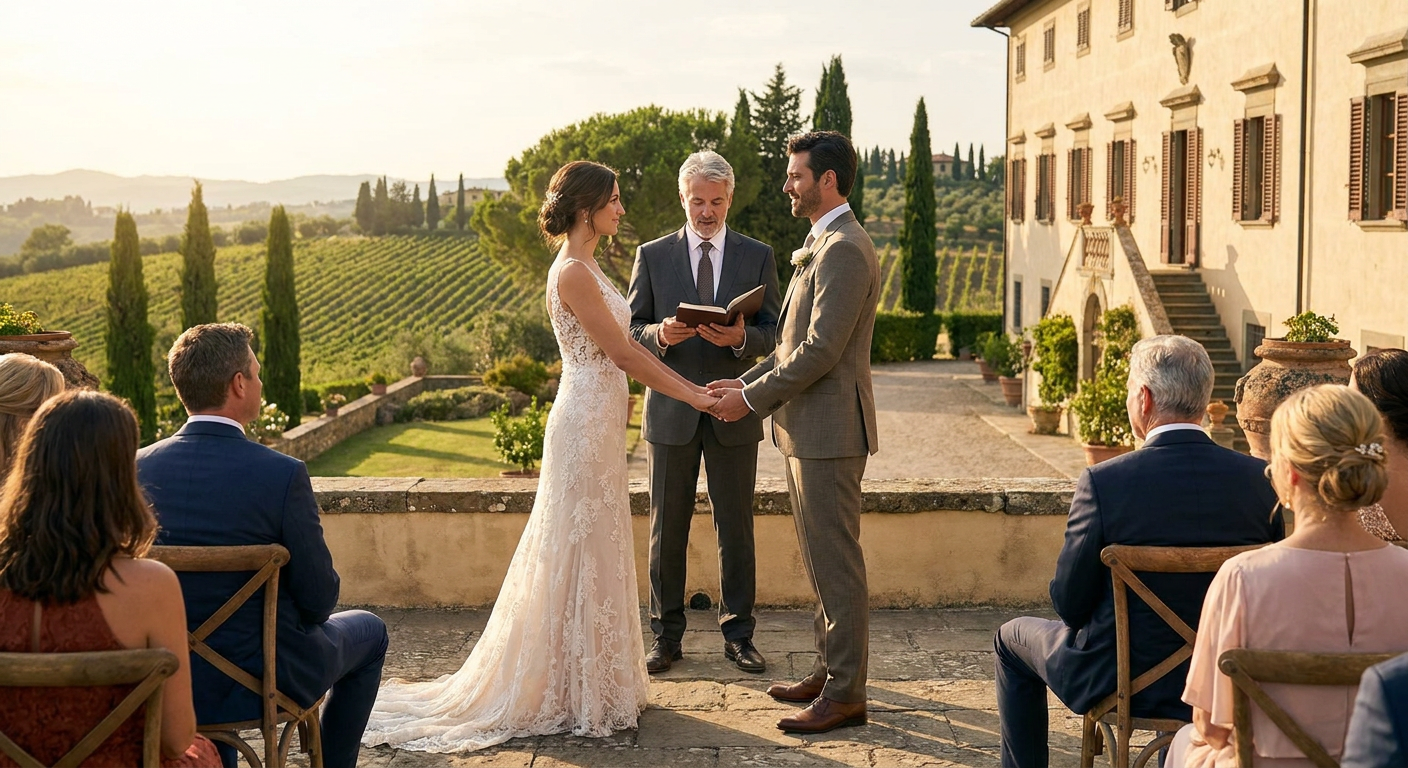
What I wish someone had
told me before we got married.
Most couples spend more time planning their wedding than preparing for their marriage. The skills that make a marriage flourish are real, learnable, and almost no one teaches them. Until now.
You're being prepared for a wedding. Not a marriage.
Most couples enter marriage with enormous hope — and almost no preparation for what actually makes it work. They've been through the engagement photos, the venue tours, the registry. Maybe even a pre-marital class at church.
But nobody sat them down and said: here is what conflict will actually look like. Here is what to do when one of you shuts down. Here is how two people who love each other can slowly drift into strangers under the same roof.
That gap is not your fault. But closing it — before the marriage begins — is one of the best investments you will ever make.
You know how to fall in love. You don't yet know how to stay known to each other over the long haul.
You've seen conflict end relationships. You don’t know how healthy repair actually works.
You've been told commitment is everything, but not how to practice it when feelings go cold.
You want a marriage built on something deeper than romance. You're not sure what that looks like.
Seven skills. A system, not a checklist.
The Skill of Self-Disclosure
The original design for marriage — Genesis 2:25, naked and unashamed — is full mutual knowing. Most couples present a managed version of themselves. This skill closes the gap between the self you show and the self you actually are.
01 REVEAL
The Skill of Emotional Self-Governance
The unregulated spouse becomes a wrecking ball — not because they're bad, but because they're ungoverned. Reactivity is the enemy of intimacy. This skill teaches you to pause, not suppress, and to become a steward of your own emotional state.
02 regulate
The Skill of Full Attention
Most people listen to respond. Real listening — attending to what your spouse is actually saying, not what you assume they mean — is a learned discipline. The partner who is not truly heard learns to stop revealing. These two skills live or die together.
03 Listen
The Skill of Release
Forgiveness is the most misunderstood word in marriage. It is not trust, not forgetting, not minimizing. It is releasing the debt — and it is a decision, not a feeling you wait for. This skill clears the ground before anything else can be built.
04 FORGIVE
The Skill of Rupture Recovery
Every marriage has conflict. The question is not whether ruptures happen — it's whether you know how to recover from them. Small, unrepaired wounds compound into resentment. This skill gives you the language and structure to actually heal, not just apologize.
05 REPAIR
The Skill of Shared Construction
Many couples survive their marriage without ever building anything together. Parallel lives in the same house. This skill moves you from maintenance mode into shared vision — rituals, mission, meaning. What is this marriage actually for?
06 Build
The skill of covenant orientation
Commitment is not a wedding-day event. Contract thinking — I will if you will — quietly replaces covenant thinking without most couples noticing. This skill names the difference and gives you a living framework for practicing covenant love, not just professing it.
07 COMMIT
Grace is the foundation. Skill is the means.
This coaching program is built on a conviction: that God's design for marriage is genuinely good, and that the skills required to live inside that design are real, learnable, and worth pursuing with seriousness.
The seven skills aren't a substitute for grace — they're the embodied form of it. Covenant love isn't just a theological category. It's something you practice, week by week, in specific moments with a specific person.
You don't have to be deeply religious to benefit from this framework. But if you are, you'll find that Scripture isn't decoration here — it's the architecture.
This coaching is a good fit if…
You're engaged or seriously dating and want to start your marriage with real preparation, not just good intentions.
You've done a church pre-marital class but want to go deeper — practical tools, not just principles.
You're a faith-background couple who wants your marriage to reflect something beyond cultural defaults.
One or both of you grew up in a home where conflict wasn't handled well, and you want to break that pattern before it starts.
You sense there are things you haven't fully said to each other yet — and you want a safe structure to say them.
You want someone who has been married 25 years, has seen thousands of couples, and will be honest with you.
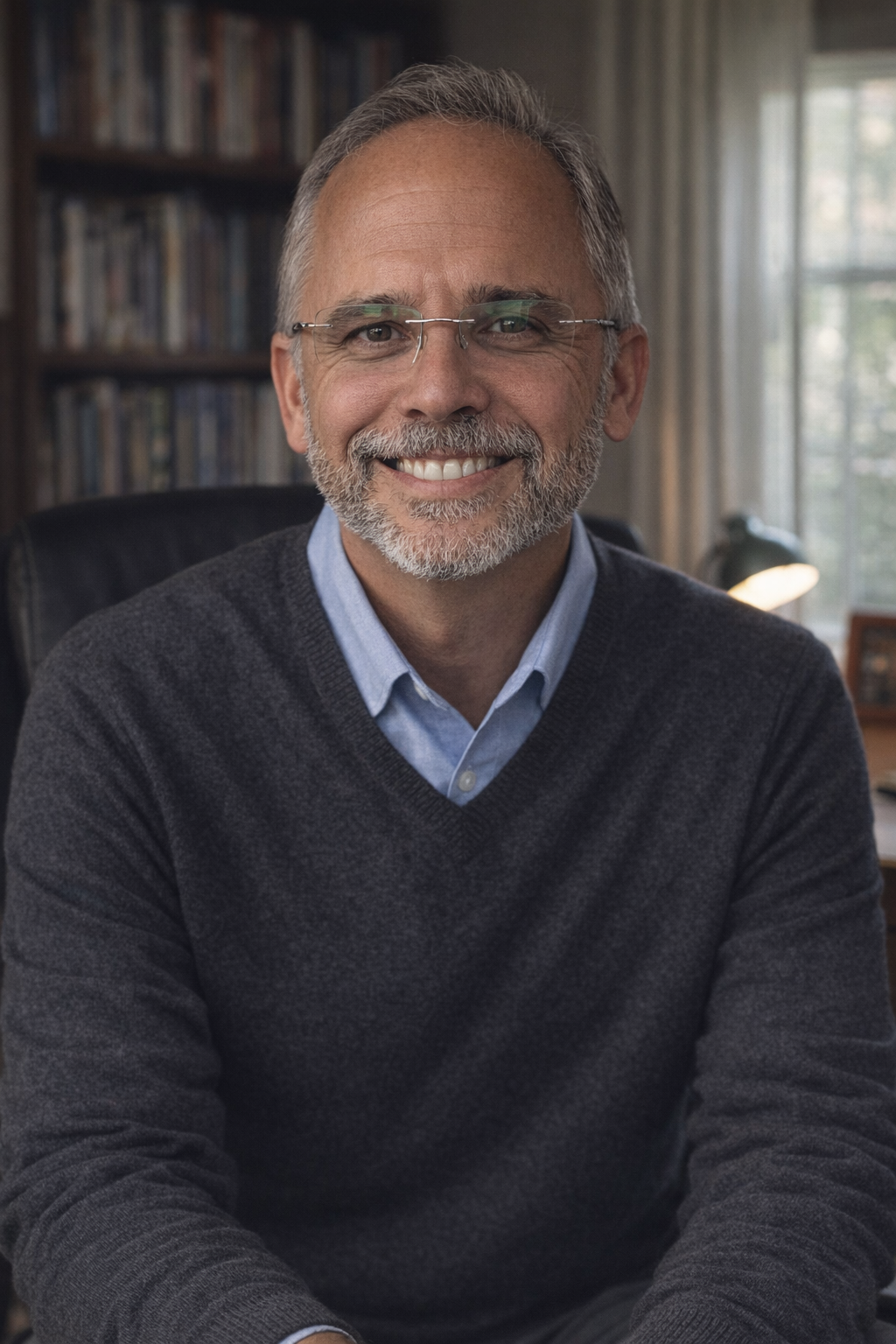
Wade Arnold—The christian Marriage Mentor
I'm a couples coach, ordained pastor, and I've been doing marriage work for over 15 years — as a clinician, a pastor, and a husband. I've sat with couples in crisis, and I've sat with couples who just wanted to start well. The work that starts well is more interesting to me.
The Seven Skills framework comes out of everything I've learned in that time — from research, from Scripture, from practice, and from my own marriage. It's the curriculum I wish someone had handed me the year before we got married.
I work nationwide through the Covenant Marriage Blueprint coaching program. This is not therapy — it's formation. We'll go deep, we'll be practical, and you'll leave with tools you'll use for the rest of your marriage.
I earned the MDiv in Theology and Counseling from Baylor University and PhD in Counseling Psychology from the University of Florida.
Start your marriage
with something solid.
The consultation call is free, low-pressure, and about 30 minutes. We'll talk about where you are, what you're hoping for, and whether this is the right fit.
Nationwide coaching via video — wherever you are.
How It Works
Simple process. Serious preparation.
01 Schedule a free consultation call
We start with a 30-minute conversation — no commitment required. You'll share where you are, what you're hoping for, and I'll answer any questions you have about the process. If it's a good fit, we move forward. If it's not, I'll tell you honestly.
02 Complete your intake assessment
Before your first session, both of you complete a brief assessment that helps me understand your relationship history, your strengths, and the areas most worth your attention. This isn't a test — it's a starting point for honest conversation.
03 Work through the seven skills together
We meet via video — typically six to eight sessions, spaced to give you time to practice between conversations. Each session focuses on one or two of the seven skills, with real tools, real conversations, and real application to your specific relationship.
04 Build your Covenant Marriage Blueprint
By the final session, you'll have a shared framework for your marriage — not just a list of things you learned, but a living document that reflects your values, your commitments, and the practices you've agreed to build your life around.
your next steps
Frequently Asked Questions
-
Most couples complete the program in six to eight sessions. Each session runs about 50 minutes. The pacing is intentional — we move through the material at a rate that lets you actually practice what you're learning, not just cover it.
-
Both. Seriously dating couples often find this work clarifying in ways that go beyond preparation — it helps them understand whether and how they want to move forward. If you're heading toward engagement and want to go in with clear eyes, this is a good time to start.
-
No. This is coaching — specifically, faith-integrated marriage coaching. It is not clinical treatment and does not require a mental health diagnosis. If deeper clinical work is indicated, I'll say so and help you find the right resource.
-
You don't have to be actively practicing, but this framework is built on an integration of Christian theology and relationship research. It involves Covenant, Scripture, the gospel as the model for marriage. Couples who have a faith background, even if it's complicated or in process, tend to get the most out of it.
-
All sessions are conducted via video, which means we can work together wherever you are in the country. You just need a quiet hour and a decent Wi-Fi connection.
-
Pricing is discussed during the consultation call. The investment varies based on the scope of the program. What I can tell you is that this is not cheap — and it is worth it. Most couples spend more on flowers than on marriage preparation. I'd rather help you change that math. The value provided in the program is truly invaluable and far exceeds the investment.
-
Church pre-marital programs are valuable, and this is designed to complement them, not replace them. Most church programs cover the theology and the vision. This goes further into the practical skills — what to do in a specific moment of conflict, how to rebuild after a rupture, how to build shared meaning over a lifetime. I have served as a pastor and done church-based pre-marital counseling many, many times. This goes well-beyond what most pastors are able to provide.
Still have questions? The consultation call is the best place to ask them. It's free, it's 30 minutes, and there's no obligation.